
 Cart is empty
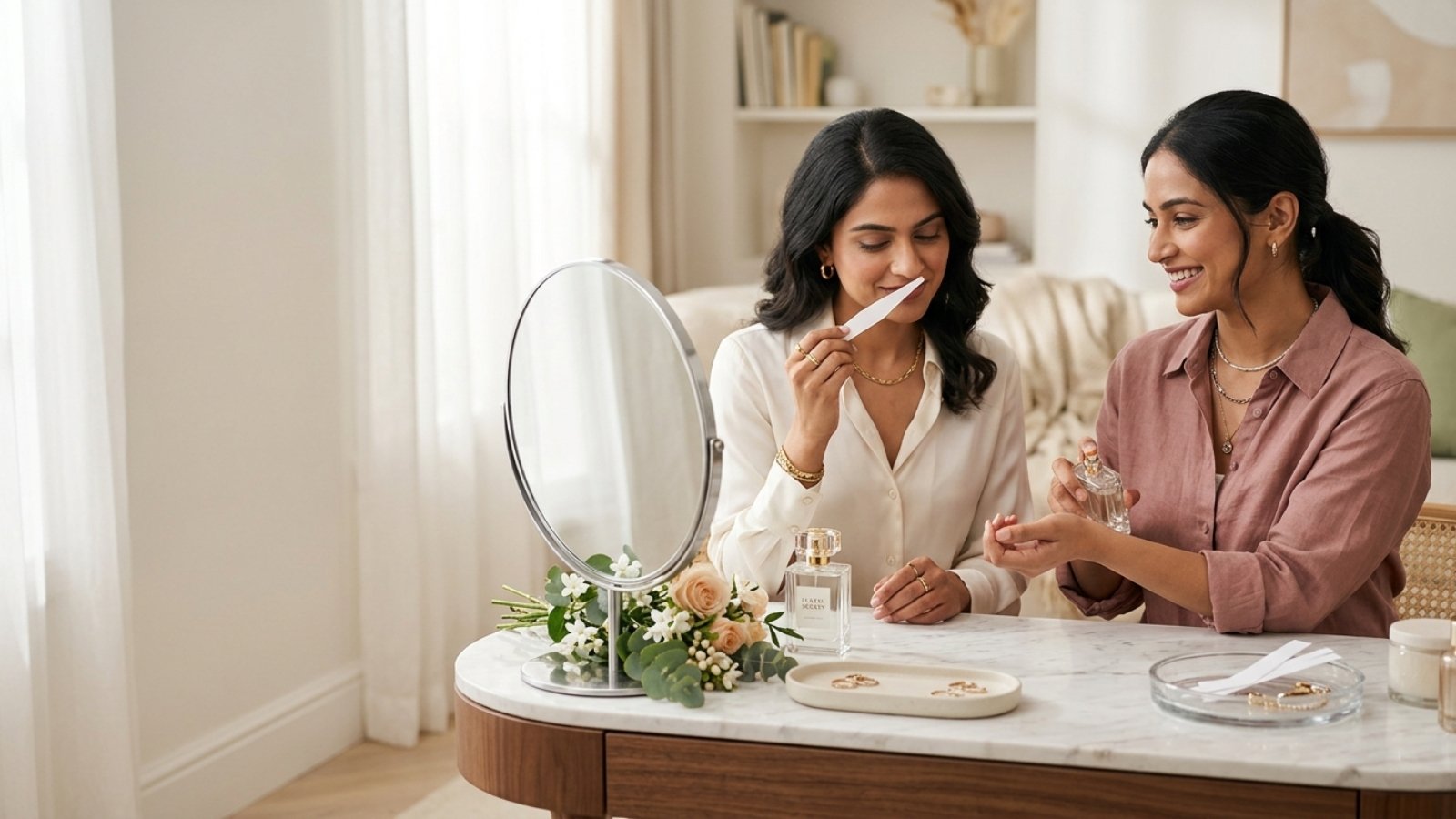
Have you ever tried a perfume that smelled amazing on your friend but seemed different on your own skin? You are not imagining it. Perfume can smell different on different people because fragrance interacts with skin, temperature, the surrounding environment, and each person’s sense of smell.
A fragrance does not always smell exactly the same from the moment you apply it until the end of the day. Its notes develop over time, too. Understanding these differences can help you choose a perfume that suits your preferences and lifestyle.
In this guide, Floral Scents explains why the same perfume may smell different on different people and how to find a fragrance that works for you.
Quick Answer: Why Does Perfume Smell Different on Different People?
Perfume can smell different on different people because skin condition, body temperature, natural skin scent, application habits, and environmental conditions influence how a fragrance develops and how we perceive it. Fragrance notes also change over time. Your sense of smell and personal preferences affect which parts of a perfume you notice most.
1. Skin Type Can Affect How Perfume Smells
Your skin condition can influence how a perfume performs. Two people may apply the same fragrance but notice differences in its strength or how long they can smell it.
Oily skin
Fragrance ingredients can interact with the oils on your skin. As a result, some perfumes may seem to last longer or smell more noticeable on oily skin. However, the result depends on the individual fragrance and the person wearing it.
Dry skin
Perfume may seem to fade more quickly on dry skin. Fragrance can sometimes be easier to notice for longer when applied to well-moisturised skin.
If your skin is dry, consider applying a fragrance-free moisturiser before your perfume. Allow it to absorb first, then apply your fragrance according to its instructions.
Tip: Do not assume that every perfume will perform the same way on every skin type. Testing a fragrance on your own skin is the most useful way to assess it.
2. Body Temperature and Weather Matter
Temperature can influence how quickly fragrance ingredients evaporate. This affects how a perfume develops and how noticeable it seems.
For example, a perfume may smell more intense in warm conditions because its volatile ingredients evaporate more quickly. In cooler conditions, the same fragrance may seem softer or develop differently.
Humidity, ventilation, and whether you spend time indoors or outdoors can also change your fragrance experience.
This is especially useful to consider in Pakistan, where temperatures can vary considerably between seasons and locations. A perfume that feels comfortable during a cool evening may seem stronger during a hot afternoon.
Practical advice: Test your perfume in the conditions in which you normally plan to wear it. This gives you a more realistic idea of how it smells throughout your day.
3. Your Natural Skin Scent Plays a Role
Every person has a natural skin scent. Factors such as sweat, skin oils, personal care products, and daily activities contribute to the way a person smells naturally.
When you apply perfume, its aroma combines with the smells already present on your skin. This interaction may influence your overall fragrance experience.
For instance, you might notice a soft floral character first, while another person wearing the same perfume notices its warmer or woodier qualities.
This does not mean that your skin is changing the perfume into a completely different product. Instead, the fragrance, your skin, and your perception work together to create the scent you notice.
4. Fragrance Notes Develop Over Time
One of the most important reasons perfume smells different throughout the day is the way its ingredients evaporate.
Perfumes are often described using three stages of fragrance notes.
Top notes
Top notes are usually the first scents you notice after applying a perfume. They often create the initial impression and may include fresh, citrus, or aromatic notes.
Middle notes
Middle notes, sometimes called heart notes, become more noticeable as the opening notes fade. Floral, fruity, and spicy accords are common examples.
Base notes
Base notes tend to emerge more clearly later in the fragrance’s development. They may include woody, musky, resinous, or warm accords.
Not every perfume follows an identical pattern, and these stages can overlap. Still, they explain why a perfume can smell fresh at first and warmer or deeper later.
Remember: Do not judge a perfume only by its first few minutes. Give it time to develop before deciding whether it suits you.
5. Your Sense of Smell Changes Your Experience
Two people can smell the same fragrance and describe it differently, even when they wear it under similar conditions.
Your sense of smell is influenced by familiarity, attention, personal associations, and individual sensitivity to different aroma compounds. One person may quickly notice citrus notes, while another may focus on flowers, woods, or musk.
Your perception can also change after smelling a fragrance repeatedly. This is sometimes called olfactory adaptation: your brain becomes less responsive to a scent that remains around you.
If you stop noticing your perfume, that does not necessarily mean the fragrance has disappeared. Other people may still be able to smell it.
Avoid repeatedly spraying more perfume just because you can no longer detect it. Instead, follow the product instructions and ask a trusted person for feedback if needed.
6. Skincare Products and Application Habits Can Make a Difference
Perfume does not exist in isolation. Body lotions, soaps, deodorants, and other scented products can mix with or compete against its aroma.
For example, a strongly scented lotion may make a floral perfume smell sweeter or change the overall impression you get. Using several fragranced products together can also make the result feel more intense.
Application habits matter as well. Spraying perfume on clothing instead of skin can produce a different fragrance experience because fabric and skin are different materials. However, some products may stain delicate fabrics, so check the care instructions first.
To understand your perfume more clearly:
- Test it on clean skin.
- Avoid layering several strong fragrances during your first test.
- Follow the perfume’s application instructions.
- Allow the scent time to develop.
- Avoid rubbing the application area, as this can alter how the fragrance is experienced.
7. Why Does the Same Perfume Smell Better on Your Friend?
Sometimes, you love a perfume on another person but feel less enthusiastic when you try it yourself. Several factors may explain this difference.
First, the fragrance interacts with each person’s skin and natural scent. Second, your friend may have applied it at a different time or in a different amount. Third, the environment may change how strongly you notice its different notes.
There is also a psychological element. You may associate a particular fragrance with someone whose style or personality you admire. When you wear it yourself, your expectations and associations are different.
That is why a friend’s favourite perfume is not automatically the right choice for you.
Instead of choosing a fragrance only because you like it on someone else, test it on your own skin and consider how it develops over several hours.
8. How to Choose a Perfume That Smells Good on You
Finding the right perfume is a personal process. Use these simple steps when shopping for a new fragrance.
- Start with your preferences. Decide whether you generally enjoy fresh, floral, fruity, woody, spicy, or warm fragrances.
- Test before committing. If possible, try a sample or test the perfume in-store before buying a full bottle.
- Give it time. Smell the opening, then check how the fragrance develops later.
- Test in your usual environment. Consider the weather, your daily activities, and the occasions when you will wear it.
- Avoid testing too many fragrances at once. Too many scents can make it harder to distinguish their individual characteristics.
- Choose what you enjoy. Other people’s opinions can help, but your comfort and preference matter most.
If you are exploring fragrances for different occasions, browse the Floral Scents Perfume Collection. You can also explore the Women’s Collection and Men’s Collection to compare available options.
Frequently Asked Questions
1. Does perfume smell different on everyone?
It can. Skin condition, temperature, application habits, natural skin scent, and individual smell perception can influence how a fragrance smells or seems to perform.
2. Why does my perfume smell good at first but different later?
Perfume ingredients evaporate at different rates. As the opening notes fade, the heart and base notes may become more noticeable, changing the overall scent.
3. Does oily skin make perfume last longer?
Some fragrances may seem to last longer on oily or moisturised skin, but this is not a universal rule. The ingredients, formula, environment, and individual skin all matter.
4. Why can I no longer smell my perfume?
Your sense of smell may adapt to a fragrance that stays around you. This does not necessarily mean that other people can no longer smell it.
5. Should I buy a perfume because it smells good on someone else?
Use another person’s recommendation as a starting point, not a guarantee. Test the fragrance on your own skin if possible and let it develop before deciding.
6. How can I make a perfume smell better on my skin?
Start with clean skin, consider using a fragrance-free moisturiser, avoid conflicting scented products, and follow the perfume’s application instructions. Choose a fragrance you genuinely enjoy.
Final Thoughts
So, why does perfume smell different on different people? The answer involves skin condition, temperature, natural skin scent, fragrance development, and the way each person experiences smell.
A perfume that smells fresh and light on one person may seem warmer or stronger on another. Neither experience is necessarily wrong; fragrance is personal, and its character can change with the wearer and the environment.
The best way to choose a perfume is to test it on your own skin, allow it time to develop, and select a scent that suits your preferences. Explore the Floral Scents Perfume Collection to discover available fragrance options for your personal style.
Floral Scents — Where Every Scent Tells a Story.
Add a Comment