
 Cart is empty
Choosing a perfume can feel confusing when so many fragrances promise to smell fresh, sweet, elegant, or unforgettable. Two popular fragrance styles are floral and fruity perfumes. Both can be pleasant choices for everyday wear, but they create different scent experiences.
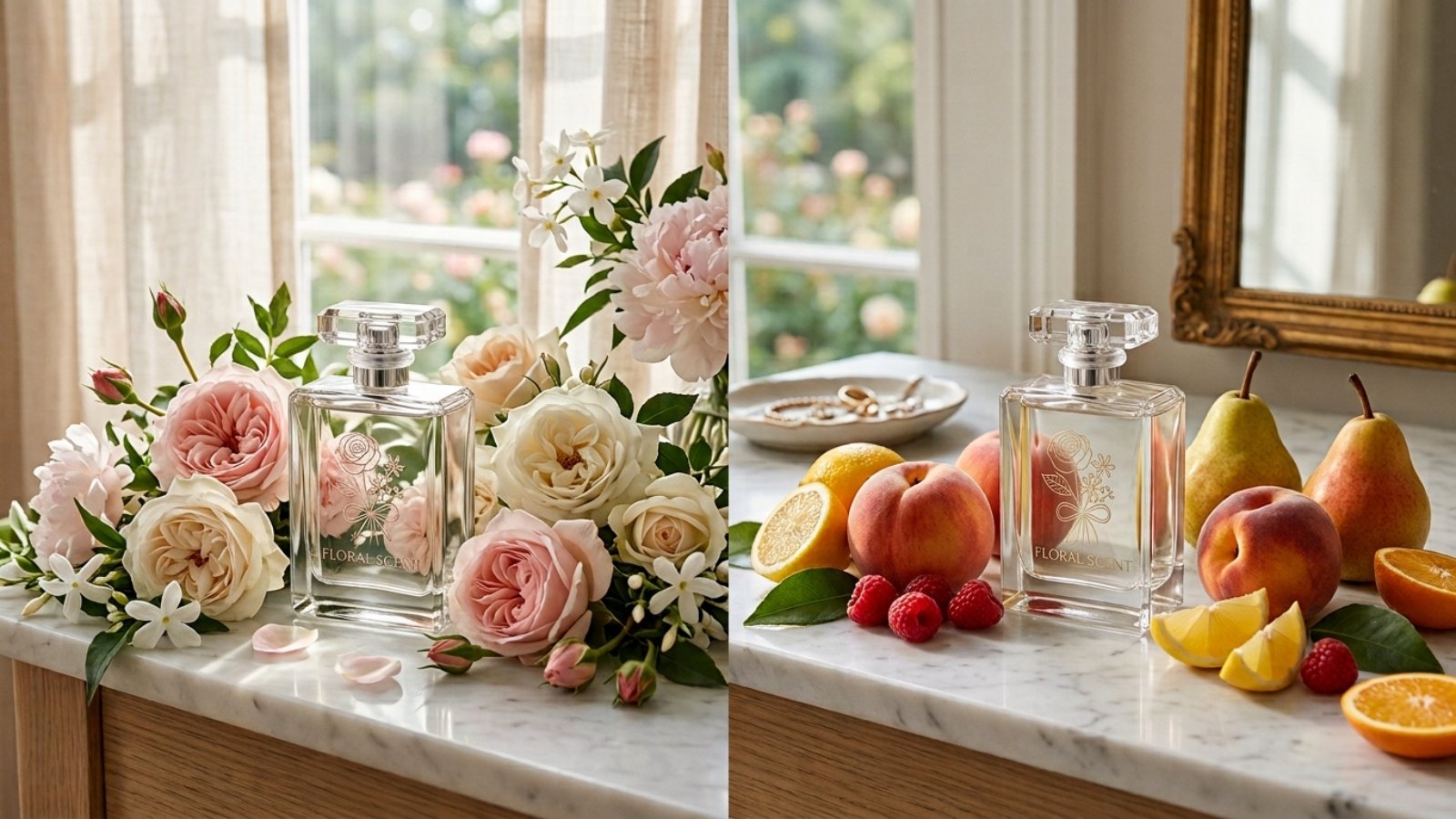
Floral and fruity perfumes are often chosen for their expressive, versatile character. Floral fragrances focus on the scent of flowers, while fruity fragrances highlight juicy, sweet, tangy, or refreshing fruit notes. Some perfumes combine both styles to create a balanced fragrance that feels fresh, soft, and lively.
Whether you are shopping for a daily perfume, a fragrance for a special occasion, or a new addition to your collection, understanding these differences can help you make a more confident choice.
In this guide, Floral Scents explains how floral and fruity perfumes differ, their potential benefits, and how to choose a scent that matches your preferences, lifestyle, and budget.
What Are Floral Perfumes?
Floral perfumes are fragrances built around the scent of flowers. They may feature one prominent flower or a combination of several floral notes.
Common floral notes include:
- Rose: Often associated with a romantic, classic, or rich floral character.
- Jasmine: Can smell soft, sweet, creamy, or intense, depending on the composition.
- Peony: Commonly associated with a delicate, airy floral impression.
- Jasmine and orange blossom: May create a bright, sweet, or white-floral character.
- Lily and gardenia: Can add fresh, green, creamy, or more pronounced floral qualities.
The final smell depends on how these notes are blended with other ingredients. For example, a rose perfume with musk may feel soft and clean, while rose combined with woods or amber notes can feel warmer and deeper.
Floral perfumes are not limited to one gender or age group. Anyone can enjoy them, and the best choice depends on personal taste rather than a label.
Benefits of choosing a floral perfume
1. Versatile fragrance options
Floral fragrances range from light and fresh to rich and intense. This variety makes it easier to find a style that suits different preferences and occasions.
2. A polished everyday scent
A soft floral perfume may be suitable for university, the office, shopping, or casual gatherings, particularly when applied lightly.
3. Plenty of variety
If you enjoy flowers, you can explore rose, jasmine, peony, orange blossom, and many other floral directions instead of sticking to one scent.
4. Easy to pair with other fragrance notes
Floral notes can be combined with fruit, citrus, musk, woods, or warm notes. These combinations create very different fragrance profiles.
What Are Fruity Perfumes?
Fruity perfumes feature notes inspired by fruits. Depending on the composition, they may smell juicy, sweet, crisp, tangy, tropical, or refreshing.
Popular fruity notes include:
- Peach: Often gives a soft, juicy, sweet impression.
- Pear: Commonly associated with a light, crisp, fresh character.
- Raspberry: Can add a sweet-tart, berry-like impression.
- Apple: Often contributes a crisp, bright, or fresh quality.
- Mango: Can create a ripe, tropical, juicy impression.
- Mandarin and other citrus fruits: Often add a bright, zesty quality.
Not every fruity perfume smells like candy. Some are fresh and subtle, while others are noticeably sweet or rich. The other notes in the formula influence the final result.
Benefits of choosing a fruity perfume
1. A lively scent profile
Fruit-inspired notes can give a fragrance a bright, playful, or energetic character.
2. Options for different sweetness preferences
You can choose crisp apple or citrus if you prefer freshness, or peach and berries if you enjoy a sweeter scent.
3. Useful for everyday fragrance collections
Many fruity fragrances suit casual daytime use, depending on their intensity and overall composition.
4. Works well in blended fragrances
Fruity notes can soften or brighten floral, woody, and other fragrance styles, creating a scent with more than one dimension.
Floral vs Fruity Perfumes: What Is the Difference?
The main difference is the character of the notes that dominate the fragrance. Floral perfumes emphasize flowers, while fruity perfumes emphasize fruit-inspired notes. However, many fragrances combine both families.
| Feature | Floral perfumes | Fruity perfumes |
|---|---|---|
| Main scent character | Flower-inspired | Fruit-inspired |
| Common notes | Rose, jasmine, peony, gardenia | Peach, pear, apple, raspberry |
| Overall impression | Can be delicate, romantic, fresh, or rich | Can be juicy, crisp, sweet, tangy, or tropical |
| Good starting point if you enjoy | Bouquets, petals, soft or rich floral scents | Fresh fruit, berries, citrus, or sweet scents |
| Everyday use | Many lighter floral options can work well | Many fresh or moderately sweet options can work well |
| Best pairing possibilities | Fruit, musk, woods, citrus | Flowers, musk, woods, citrus |
Remember that these are general descriptions, not strict rules. A fruity perfume can be sophisticated and deep, while a floral perfume can be bright and refreshing. The complete fragrance composition matters more than the category name alone.
Floral and Fruity Perfumes: Which One Should You Choose?
The right fragrance is the one you enjoy wearing. Use the following guide to narrow down your options.
Choose a floral perfume if…
- You enjoy the scent of roses, jasmine, or other flowers.
- You prefer fragrances that feel soft, elegant, or bouquet-like.
- You want to explore fresh florals for daytime or richer florals for evenings.
- You like floral notes combined with musk, woods, or warm accords.
For example, a rose-and-musk fragrance may appeal to someone who likes a soft, clean floral impression. A jasmine-and-amber composition may suit someone who prefers a warmer, more noticeable scent.
Choose a fruity perfume if…
- You enjoy sweet, juicy, crisp, or tangy scent profiles.
- You prefer fruit notes such as peach, pear, apple, or berries.
- You want to explore playful or refreshing fragrance styles.
- You like scents that combine fruit with floral or woody notes.
For example, pear with citrus may appeal to someone who enjoys fresh, bright scents. Peach with vanilla may suit someone who likes a sweeter, warmer fragrance.
Choose a floral-fruity perfume if…
You like both styles and want a fragrance that combines their qualities.
Floral-fruity fragrances bring flower-inspired notes together with fruit-inspired notes. A blend of peony and pear, for instance, suggests a soft floral character with a crisp, juicy accent. Rose and raspberry can create a sweeter, berry-like floral direction.
These are examples of scent combinations, not descriptions of specific Floral Scents products. Actual perfumes can smell different depending on their formulas.
How to Choose the Best Floral or Fruity Perfume for Everyday Wear
Finding a fragrance for daily use involves more than selecting your favourite scent family. Consider where you will wear it, how strong you want it to smell, and how comfortable it feels after application.
1. Identify the notes you enjoy
Start by thinking about the smells you naturally like.
Do you prefer fresh flowers, sweet roses, juicy peaches, crisp apples, or bright citrus? This simple step helps you narrow down a large fragrance collection.
If you are unsure, try samples of different fragrance styles rather than buying a full bottle immediately.
2. Consider your daily environment
For university, work, public transport, or other shared spaces, you may prefer a fragrance that feels pleasant without becoming overwhelming.
A light floral, a fresh fruity fragrance, or a balanced floral-fruity blend can be a good starting point. Apply a small amount first and adjust according to the perfume’s strength and your surroundings.
For social events or evenings, you may prefer a richer floral or a sweeter fruity blend. The occasion can guide your choice, but you do not have to follow rigid fragrance rules.
3. Think about Pakistan’s weather
In warm weather, some people prefer fragrances with fresh citrus, airy florals, or crisp fruit notes because they can feel lighter to wear. In cooler weather or air-conditioned environments, you may enjoy sweeter, warmer, or richer compositions.
However, no fragrance family is restricted to a particular season. Personal preference, the formula, and how much you apply all matter.
4. Check the concentration and performance expectations
A perfume’s scent family does not determine how long it lasts. Longevity and projection depend on factors such as its formula, concentration, application, skin, and environment.
When comparing products, check the stated concentration and reliable product information. If possible, test the fragrance on your skin and see how it develops over several hours.
Do not assume that every fruity perfume is weak or every floral perfume is long-lasting.
5. Test before committing
If you can test a perfume, follow these steps:
- Smell it on a blotter or testing strip first.
- If you like it, apply a small amount to your skin.
- Notice the opening scent and how it changes over time.
- Check whether the fragrance remains comfortable after 30 minutes or longer.
- Decide whether you enjoy it enough for regular use.
Testing matters because a perfume can smell different on a strip and on skin. Give yourself time to decide instead of buying based only on the first spray.
Are Floral and Fruity Perfumes Good for Everyday Use?
Yes. Both styles can be suitable for everyday use, depending on the specific fragrance and how you apply it.
For daytime wear, consider these starting points:
- University or casual outings: A fresh fruity fragrance or soft floral.
- Office or professional settings: A restrained floral, fresh fruity scent, or balanced floral-fruity blend.
- Shopping and daily errands: A fragrance you find comfortable and easy to wear.
- Lunch or social gatherings: A fruity-floral blend with the level of sweetness you prefer.
- Evening occasions: A richer floral, deeper fruity blend, or fragrance with warm base notes.
These are suggestions, not fixed rules. You can wear any fragrance family whenever you enjoy it, while keeping the setting and fragrance intensity in mind.
How to Layer Floral and Fruity Fragrances
Fragrance layering means wearing two scented products together to create a combined scent impression. You do not need a large collection to experiment.
Here is a simple approach:
Step 1: Start with one main fragrance. Choose a floral or fruity perfume you already enjoy.
Step 2: Add a complementary scent. A floral perfume may pair with a fruity body mist, while a fruity perfume may work with a soft floral mist. Similar or complementary notes can be a helpful starting point.
Step 3: Use a light hand. Apply a small amount of each product so the combination does not become too strong.
Step 4: Test the combination first. Try the products separately and together, then see how the combined scent develops.
Step 5: Keep the result balanced. If one scent overwhelms the other, reduce the amount or use only one product.
Avoid assuming that two products will blend well simply because their labels mention flowers or fruit. Their individual compositions matter. Also, follow each product’s instructions and stop using it if it causes irritation.
Common Mistakes to Avoid When Buying Perfume
Even a beautiful fragrance may not be the right purchase if you choose it without considering your preferences.
- Buying only because it is popular: Trends do not guarantee that you will enjoy a fragrance.
- Judging from the first spray: The opening may change as the fragrance develops.
- Using too much perfume: Strong application can be uncomfortable for you and the people around you.
- Expecting every fruity fragrance to be very sweet: Fruity scents can also be crisp, fresh, or tangy.
- Assuming floral perfumes are always delicate: Some floral compositions are intense, rich, or bold.
- Ignoring product details: Check the bottle size, concentration, ingredients where provided, seller information, and return policy before purchasing.
A thoughtful purchase starts with knowing what you like and checking what the product actually offers.
Frequently Asked Questions
1. What is the difference between floral and fruity perfumes?
Floral perfumes focus on flower-inspired notes such as rose, jasmine, and peony. Fruity perfumes highlight notes inspired by fruits such as peach, pear, apple, and berries. Some perfumes combine both styles.
2. Are floral perfumes better than fruity perfumes?
Neither style is universally better. Floral perfumes may appeal to people who enjoy flower-inspired scents, while fruity perfumes may suit those who prefer juicy, crisp, or sweet notes. The best option depends on your personal taste.
3. Which perfume is better for everyday wear?
Both floral and fruity perfumes can work for everyday wear. Consider the fragrance’s intensity, your environment, and how much you apply. A lighter composition may be a useful starting point for shared spaces.
4. Are floral-fruity perfumes suitable for summer in Pakistan?
They can be. Fresh floral-fruity compositions may feel comfortable in warm weather, but suitability depends on the formula and your preference. Test the perfume and apply a moderate amount to find what works for you.
5. Do fruity perfumes last longer than floral perfumes?
Not necessarily. Longevity depends on the individual perfume’s formula, concentration, application, skin, and environment—not simply whether it is floral or fruity.
6. Can I layer a floral perfume with a fruity body mist?
Yes, you can experiment with a floral perfume and a fruity body mist. Start with a small amount of each, test the combination, and adjust until the result feels balanced. Always follow the product instructions.
Find a Fragrance Style That Feels Like You
Choosing between floral and fruity perfumes does not have to be difficult. Floral fragrances offer a wide range of flower-inspired scents, while fruity fragrances can bring juicy, crisp, sweet, or refreshing character to your fragrance routine. Floral-fruity combinations offer another option for people who enjoy both.
Start with the notes you naturally like, consider when and where you will wear the fragrance, and test it when possible. Instead of choosing a perfume just because it is trending, look for one that feels comfortable and suits your personal style.
At Floral Scents, explore fragrance options that fit your preferences and discover a scent you will enjoy wearing. Whether you are drawn to soft florals, refreshing fruit notes, or a blend of both, the right choice begins with understanding what you love.
Add a Comment